
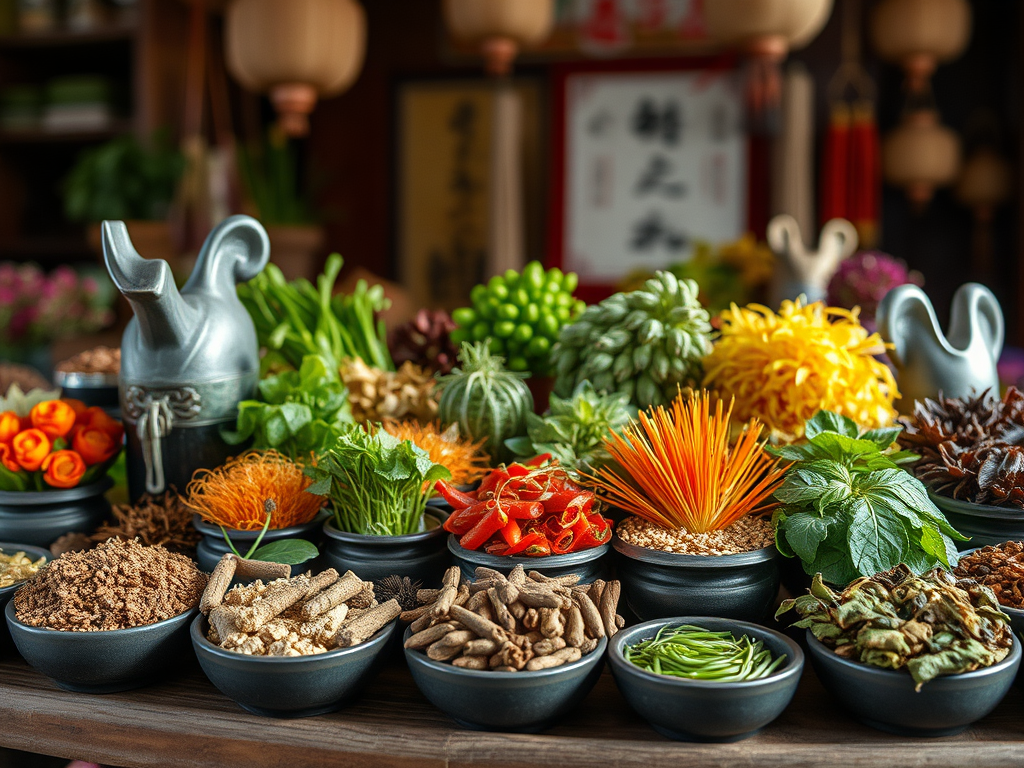

What Is Traditional Chinese Medicine?
Traditional Chinese medicine (TCM) has evolved over thousands of years. TCM practitioners use various psychological and/or physical approaches (such as acupuncture and tai chi) as well as herbal products to address health problems.
Herbal products are used for many medical conditions, including stroke, heart disease, mental disorders and respiratory illnesses (such as bronchitis and the common cold).
Chinese herbology, along with treatment techniques like acupuncture, is one of the most important tenets of the ancient wellness practice known as Traditional Chinese Medicine. This holistic tradition, and others from around the world, tap into the power of plants to heal and invigorate the human body.
While Western medicine is focused on treating disease and reacting to its symptoms, TCM tries to prevent those symptoms occurring in the first place by keeping our bodies balanced and in harmony.


Adding Chinese Herbs to Your Routine
Ask for advice.
Tips for Using Chinese Herbs
Herbal remedies are one of the most important modalities in the ancient Chinese tradition of treating illness. And proactively promoting wellness. The simplest way to use these herbs is as supplements, swallowed with a glass of water like your daily vitamin.


The Main Plants of Chinese Medicine
The therapeutic effects of plants are widely varied and widely recognized, from energy to pain relief to immune support and more. Natural products like herbal supplements are often used as complements to Western medicine. The long list of Chinese herbs that double as wellness remedies includes multiple parts of plants, including roots, flowers, and bark. All treated and processed with care so each individual patient can reap the most benefits from these TCM ingredients.
Chinese herbs can be used successfully, as part of a well-rounded healing plan, for ailments ranging from muscle and joint pain to digestion and to noticeably improve the quality of sleep, immunity, and more.
1. Ren Shen (Red Ginseng Root)
Red Ginseng is a leafy plant, native to Asia, whose root has long been known in Traditional Chinese Medicine as a powerful adaptogen.
It’s a natural substance that helps the body adapt to stress with a multitude of health benefits.
2. Dang Shen (Codonopsis Root)
Codonopsis root, though less well-known in the West than ginseng, is one of the most commonly used herbs in the practice of Traditional Chinese Medicine. That’s right,
It promotes whole-body health by supporting digestion and overall energy levels. It is used to improve vitality and a general feeling of brightness and well-being.
3. Huang Qi (Astragalus Root)
Astragalus is another Asian root. This herb is known as an excellent immune system booster. Chemical compounds found in astragalus, studies have shown, can work to alleviate oxidative stress on the body. while decreasing inflammation and regulating the immune response at a cellular level.
4. Bai Shao (White Peony Root)
Traditional Chinese Medicine, peony root is often used to aid blood circulation, increase energy, and balance mood.
In particular, this herb has historically been used to help with anxiety and depression.
Above all, improved focus and mental stability are both expected outcomes of a regular regimen of peony root supplementation
5. Suan Zao Ren (Jujube Seed)
The jujube fruit, also known as a red date or Chinese date, is a small fruit with a pit at the center.
Its seeds have been used medicinally for at least 3,000 years as a remedy for insomnia.
Indeed, modern studies confirm that this herb works as a natural sedative.
It’s helping you to feel like resting when your mind, body, or both can’t seem to slow down on their own.
6. Wu Wei Zi (Schisandra Berry)
Also known as the “five-flavor fruit” this Asian plant is been used for millennia to fight the symptoms of stress and fatigue.
What’s more, newer research suggests that schisandra berry may improve endurance in particular by preventing a buildup of acid in the lungs.
in the end, with the power to ease breathing in this way, schisandra berry may help you exercise longer. And even feel physically calmer in the face of anxiety or panic.
7. Jin Yin Hua (Honeysuckle Flower)
Honeysuckle is a beautifully vibrant flowering plant.
In Traditional Chinese Medicine, its most coveted characteristic is its ability to support the immune system with anti-inflammatory, antibacterial and antiviral effects.
It’s understood to help the body fight off certain ailments, like fevers, sore throats, and even skin rashes.
8. Bai Zhu (Atractylodes Root)
The root of the atractylodes plant has a long history as one of the most important herbs in Traditional Chinese Medicine.
With many medical uses, it’s especially well known for its ability to support metabolism and improve the function of the digestive tract.
Atractylodes root is an invigorating herb that supports overall mood and well-being by targeting the flow of Qi. A TCM’s concept of essential energy.
9. Bai Zhi (Fragrant Angelica Root)
first of all, it must be said thatThis herb is one with quite a range of powers.
To many TCM practitioners, fragrant angelica root’s core use is working to open up the nasal passages.
This in turn helps alleviate the discomfort of congestion, cold symptoms, and headaches.
In addition, many patients find that fragrant angelica root reduces related tension in the head, neck, and shoulders, along with all over body aches.

Certified acupuncturist to help you restore your well-being.
Chinese Medicine in Cranbrook, BC.