
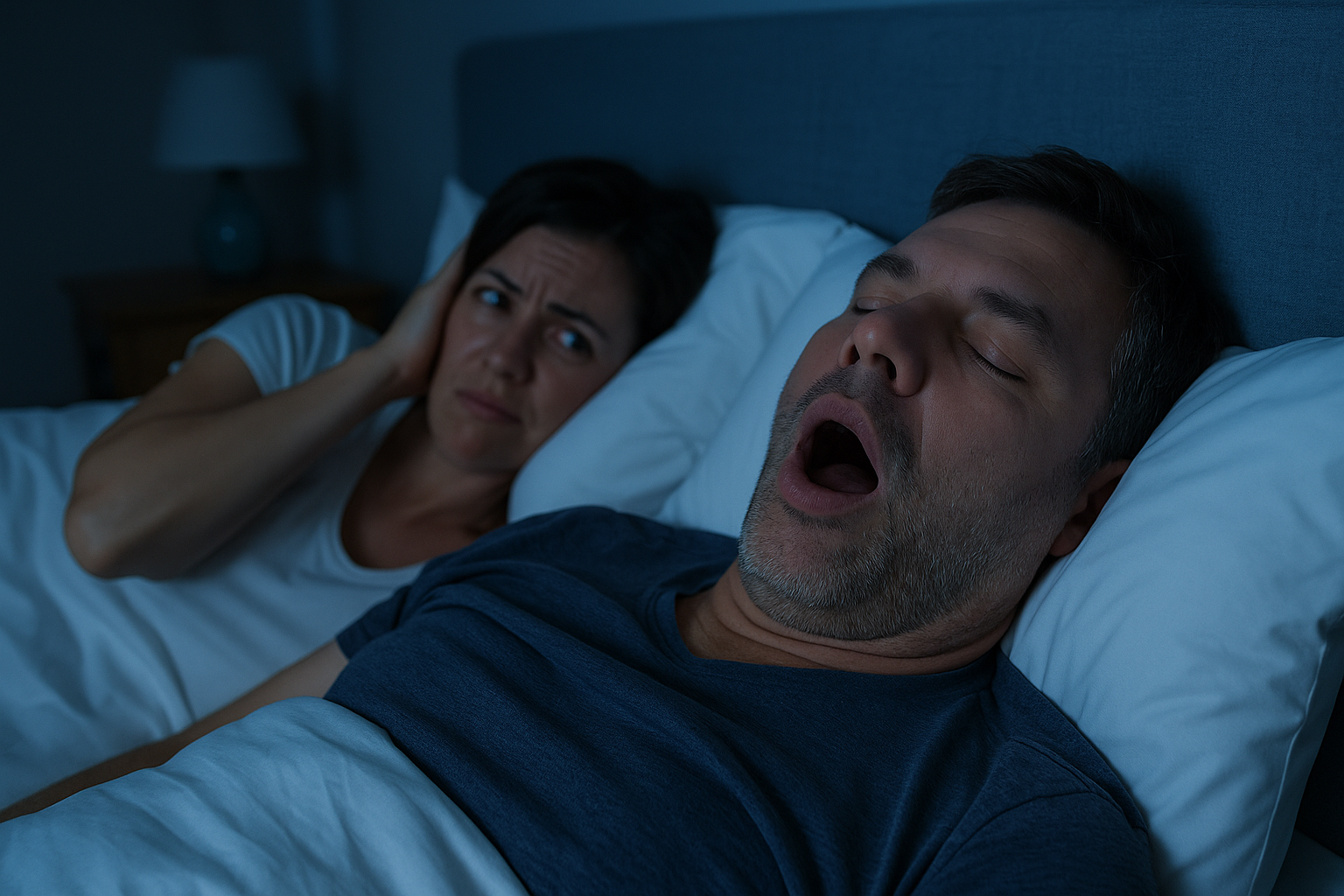

What Causes Snoring?
Not everyone who snores has sleep apnea, and not all sleep apnea sufferers snore. Common causes of snoring include:
- Nasal congestion due to allergies or colds
- Alcohol or sedative use (e.g., sleeping pills)
- Late-stage pregnancy
- Anatomical features like a large tongue or tonsils
- Sleeping on your back
Sleeping on your side can help reduce snoring and apnea, but it’s difficult to control sleep positions overnight.
Could Your Snoring Be a Sign of Sleep Apnea?
Have you been told you snore loudly at night? Do you still feel exhausted after a full night’s sleep? Waking up with a dry mouth, struggling to stay asleep, and experiencing constant fatigue are all common signs of sleep apnea—a serious but often undiagnosed sleep disorder.
Sleep apnea occurs when normal breathing is repeatedly interrupted during sleep. This results in reduced oxygen supply to the body and frequent, brief awakenings—often so short you don’t even remember them. Over time, this disrupted breathing pattern can impact your overall health, mood, and quality of life.
Thankfully, Traditional Chinese Medicine (TCM) and acupuncture offer a natural, holistic approach to managing sleep apnea and its related issues, including insomnia and daytime fatigue.
What Is Sleep Apnea?
Sleep apnea is a condition in which a person’s breathing stops or becomes shallow during sleep. When this happens, oxygen levels drop and the brain responds by triggering a brief awakening to resume breathing. This can occur dozens or even hundreds of times a night.
People often don’t realize they have sleep apnea unless a partner hears loud snoring, gasping, choking, or pauses in breathing during the night. As a result, many cases go undiagnosed, leaving individuals tired and at risk of more serious health issues.
Who Is at Risk?
Sleep apnea can affect anyone, but it’s most common in:
- Men over 40
- People who are overweight or obese
- Postmenopausal women, due to hormonal and metabolic changes
- Individuals with metabolic syndrome or diabetes
Obesity plays a significant role, as excess weight—particularly around the neck and upper airway—can obstruct breathing. Poor sleep quality also contributes to weight gain, creating a vicious cycle of worsening symptoms.
How Acupuncture and TCM Can Help Sleep Apnea
In TCM, sleep apnea is often seen as a result of phlegm accumulation and Qi (energy) stagnation, especially in the spleen and lungs. If Qi isn’t flowing smoothly or phlegm blocks the pathways, the lungs can’t function optimally during sleep.
Some common TCM patterns linked to sleep apnea include:
- Spleen Qi Deficiency with Phlegm Dampness – Causes heaviness, bloating, and fatigue
- Heat and Toxicity – Indicated by snoring, night sweating, and sore throats
- Liver or Gallbladder Imbalance – Can contribute to nightmares or difficulty falling asleep
A licensed acupuncturist tailors each treatment plan based on your unique pattern of symptoms, using acupuncture, herbal medicine, and lifestyle advice.
📌 Clinical Evidence: A meta-analysis of over 200 randomized clinical trials found that acupuncture can be more effective than CPAP in improving oxygen levels and reducing apnea events.


Chinese Herbal Medicine for Snoring
Chinese herbs can target inflammation, clear phlegm, and improve circulation and oxygen flow. Formulas are selected based on the individual’s TCM diagnosis and may help:
- Reduce snoring
- Improve sleep quality
- Relieve fatigue
- Support respiratory and immune health
Always consult a trained TCM practitioner to ensure safe and effective use of herbs, especially if you’re taking medications.
Natural Remedies & Acupressure for Snoring
You can also try acupressure at home to relieve congestion and promote better breathing. Focus on points along the Stomach Meridian on the shin:
- Locate a point about 2–3 inches below the knee, just to the side of the shin bone.
- Apply firm circular pressure with your thumb.
- Work your way downward about 3 inches at a time, massaging 3–4 points in total.
- Perform 30 kneading motions on each point.
If one nostril is more congested than the other at night, apply acupressure on the opposite leg.


TCM and acupuncture offer a holistic path to restful sleep, better breathing, and lasting energy—without relying solely on machines or medication.
Looking for Acupuncture Near You for Snoring and Sleep Apnea?
Find a licensed acupuncturist who specializes in sleep disorders and discuss how a personalized TCM treatment plan can help you breathe easier—and sleep better—naturally.